Secondary Resources > KS3 Religious Studies / GCSE Religious Studies
This page was published in 2014 and updated in April 2026.
Samira Ahmed:
There are 1.6 billion Muslims in the world.
And all of them are united in their belief in the teachings of the prophet Mohammed as laid out in the Koran.
If you delve deeper, beyond this single unifying point, Islam is a richly diverse religion containing a wealth of different beliefs and practices.
Perhaps the two most significant denominations within the faith are the Sunnis and the Shias.
When the prophet Mohamed died in 632 AD, there was a dilemma about who his successor should be. Some people believed that his successor should be selected; others believed that his successors should only be those who continued Mohamed’s bloodline.
So Sunni and Shia developed as two different branches of Islam, both having very different beliefs about who their chosen leaders should be.
The vast majority of Muslims in the world are Sunni, forming at least 80% of the total global Muslim population.
In reality most Shia and Sunni get along and many of them have prayed together in the same mosques for generations.
In the past there have been many fruitful cultural and also political interactions.
Sunni rulers employed Shia ministers, and in South Asia Muslims from Shia backgrounds have played an important role in leading Muslim communities consisting mainly of Sunnis.
But with some people defining trouble in the Middle East in terms of a Sunni-Shia divide, the Sunni-Shia relationship has never been under more scrutiny.
A question of leadership
Britain has an estimated Muslim population of about 3.8 million (acccording to the 2021 census). Of these, some 5% are Shia, the rest are Sunni.
The historical split occurred 1400 years ago, following the death of Muhammad in Medina, in modern day Saudi Arabia. Muslims who wanted to select his successor, or Caliph, formed into a group who would eventually become known as Sunnis. Others insisted that God had already designated the Prophet’s cousin and son-in-law Ali as his legitimate heir, which, they argued, the Prophet clearly announced before his death. This group was called Shia Ali, or ‘Party of Ali’, from which comes the word Shia.
The main responsibility of Sunni Caliphs was to maintain law and order in the Muslim realm as well as providing political and religious guidance. On the other hand, the Shia Imams, descendants of the Prophet, also held a God-given spiritual authority and were considered infallible.
Historical tensions in the Middle East and Asia have at times been interpreted in some sections of the media as a religious conflict between Sunnis and Shias. Although Muslims in the UK have been part of a united community with a shared experience of immigration, the relationship between these groups has been in the spotlight in Britain too, especially when it comes to sensitive issues around Islamic history, theology and political theory.
In the UK
Samira Ahmed:
After the Second World War, people from around the British Empire were encouraged to come to Britain to help rebuild the country.
More than 3.5 million soldiers from the Asian subcontinent fought for Britain in the two World Wars, with tens of thousands killed in action.
Sunni and Shia Muslims fought and died side by side fighting for the British in these conflicts.
Many of these immigrants were from Bangladesh, Pakistan and India.
Life in the UK was very different to life on the sub-continent, and Asian families would often move near to people from the same area to create a feeling of familiarity and community.
Initially Sunnis, Shias and people from all branches of Islam lived and socialised together, as they were a migrant community.
Their shared experience as outsiders adapting to an alien culture united them. Sunnis and Shias shared the same prayer spaces and would regard themselves as part of the same community.
As Muslim communities have become part of the fabric of life in the UK, they have started to become more distinctly defined as either Sunni or Shia. This is down to a number of factors.
A growing confidence of being Muslim in Britain has in turn fuelled an awareness within the Sunni and Shia communities of their own distinct identities and heritage.
The Shia community has expanded with migrants arriving from East Africa, enabling them to develop their own community services, including mosques and schools.
Muslims in the UK have also been influenced by events in the Middle East and Asia, where tensions between Sunni and Shia have increased.
These tensions became more pronounced upon the establishment of the Islamic Republic of Iran by Shia clerics in 1979, and the subsequent war with Iraq after Saddam Hussein’s invasion of Iran a year later.
But in the main Sunni and Shia communities in the UK retain excellent relations with each other, with problems restricted to only a few extremists. So are they really so different?
Sources of tension
The differences between Sunni and Shia Muslims are mainly expressed through different religious practices.
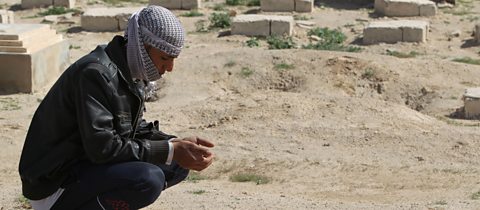
For example, there are festivals which Sunnis and Shias do not mark in the same way, such as Ashura. For Shias, Ashura is a day of mourning which commemorates the martyrdom of the Imam al-Husayn (the Prophet’s grandson and third Shia Imam). This is considered to be one of the defining events in Shia history. But for Sunnis, Ashura is a fasting day to remember the day Nuh (Noah) left the ark and the day that Musa (Moses) was saved from the Egyptians by Allah.
For centuries, there were only occasional instances where religious intolerance on both sides led to conflict.
From faith to politics
Since the late 20th Century, complex political problems have been turned into sectarian issues by the parties involved, particularly in parts of the Middle East and Asia.
This has been the case in Iraq, Lebanon, Pakistan, Afghanistan and Syria.
Since taking political power in 1979, Iran’s Shia clergy has been supporting the Shia Muslims of Iraq, Lebanon and Syria. This spreading influence has caused concern to the Sunni rulers of Arab countries with Shia minorities, such as Bahrain and Saudi Arabia. On the other hand, members of the Saudis' own Shia minority have complained of being treated as potential fifth columnists for Iran.
Iraq
In 1980, Iraq - led by Sunni leader Saddam Hussein - invaded its neighbour Iran, which was led by the country’s new Shia ruler Ayatollah Khomeini. Saddam wanted Iraq to replace Iran as the dominant state in the Persian Gulf, but he was also worried that the Iranian revolution could have a ripple effect among his country’s Shia majority. The war between Iran and Iraq was one of the bloodiest of the century, with an estimated one million Iranians and up to half-a-million Iraqis dying in the conflict.
Learn more about this topic:
Inside the Mosque: What do you need to know? document
There are over 2.5 million Muslims in the UK and the mosque has a central role in Islam. It’s the place where Muslims gather for Friday prayers and other special occasions.
My Life, My Religion: Islam. collection
A series of short films in which Kaisan and Naeem (both 12 year's old) and 11-year-old Sara explain the traditions and beliefs of their Muslim faith.
A-Z of Religion and Beliefs. collection
An animated A to Z guide for pupils aged 11-14 that explores and introduces a variety of religious topics.