Introduction
A mammal is a warm-blooded animal that has a backbone, gives birth to and feeds its young with milk. Just like us, we are mammals too.
Have you ever looked out to sea and wondered what plants and curious creatures may be lurking underneath the deep blue water and crashing waves? In Great Britain, there is a huge variety of marine life. Marine life are plants and animals that live in the sea.
Many different marine species can be found around the British Isles.

Octopus

An octopus is identified by its eight long arms, rounded body and big bulging eyes. It is a part of the A soft bodied animal with no backbone. Snails and slugs are also a part of the mollusk family. family. It is not a mammal. Octopuses commonly feed on crabs, shrimps and lobsters. They skilfully crawl across the seabed and squeeze their arms into small openings, then use the suckers that line their arms to pull their prey into their mouths.
Blue shark

The blue shark likes to visit our seas in the summer months when the water is a little warmer for them. They have a sleek, metallic blue body, which helps them to camouflage, and a long cone-shaped snout. They swim slowly to preserve their energy but as soon as they spot a small fish or squid, they have a burst of energy in order to capture their victims. Sharks are cold blooded and therefore are not mammals.
Jellyfish

These creatures come in many vibrant colours like pink, blue, purple and yellow. Did you know that jellyfish have no brain, heart, bones or eyes? Jellyfish are not mammals. They have tentacles that sting. This startles their prey and allows the jellyfish to eat them up in one big gulp. A jellyfish’s mouth is not only used to eat food such as crabs, fish and small plants but it can be used as a propeller. The jellyfish can squirt water from its mouth, and this enables them to move through the water.
Porpoise

These creatures are very shy. Even though they grow quickly, they are much smaller than dolphins. They have a blunt head, triangular fins and very sharp teeth. Porpoises are mammals. They are declining in number because they can be accidentally caught by fishermen.
Atlantic grey seal

The Atlantic grey seal is the largest species of seal to visit our shores. These seals can be easy to spot too, as they live in large groups and can often be seen lying on the beaches with their snowy white seal pups or bobbing in the waves. They are warm-blooded mammals that feed their young with milk.
Video: The life of the Atlantic grey seal
Learn all about seals, their habits and the fall and rise of the seal population over the years.
Seals
Hunting seals
Just over 100 years ago, the vicious Victorians used to hunt these mammals for their meat and kill the seal pups for their fluffy white coats. As a result, there were only 500 grey seals in the whole of the UK.
Safeguarding seals
In 1970 a new law was introduced making all of the seals in the waters around Wales, England and Scotland a protected species. This means that it is forbidden by law to harm, capture or kill them. Now, there are an estimated 120,000 grey seals on our shores.
How seals can be protected today

Image caption, Wildlife organisations often advise people to give seals space when they are resting on beaches and to keep dogs under control around them.


1 of 3
Winter babies

Its fluffy white coat keeps it warm and it is fed regularly by its mother, giving it lots of vital nutrients.
Did you know?
After only a few weeks the cute seal pup loses its fluffy white coat and is ready to learn to swim. Its mum leaves it all alone and goes back to sea to feed. The pup now needs to build up the confidence to take the plunge into the sea and hunt for its own food. Luckily, they can stay under water for half an hour at a time. During this time, they hunt for fish and crabs for a tasty treat. Have you ever held your breath underwater? How long did you manage?
Fun fact
The scientific name for the grey atlantic seal is Halichoerus grypus. This means hook-nosed sea pig.
Marine litter and coastal environments
Plastic waste can affect coastal environments and marine wildlife. Beach-cleaning activities are organised by a range of environmental groups and community organisations. Those who take part use a bag to collect the litter, normally a Made from plant based material and will rot or break down after a few months. bag and a pair of gloves and collect any litter found on the beach.

Litter on beaches and in the sea can affect wildlife and coastal environments. A range of organisations and community groups carry out clean-up activities and encourage responsible waste disposal. Beaches are important habitats for wildlife and are enjoyed by many people for recreation and tourism.
Quiz: What is the largest mammal that comes to our shores?

Where next?
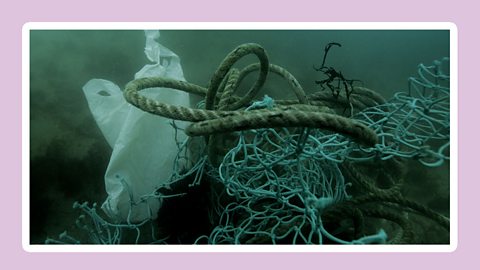
What happens when plastics get into the ocean?
Find out what impact plastic waste has on wildlife in the sea.
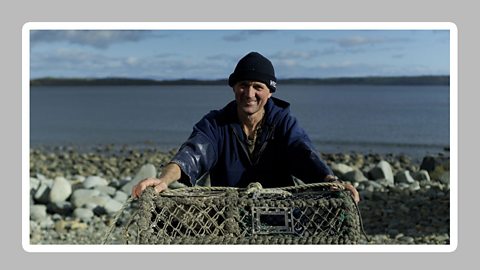
Can lobster fishing be sustainable?
How has fishing changed in Wales and how does this affect the food chain?
KS2 Sustainability
A collection of lessons for pupils aged 7 to 11
More on Wildlife
Find out more by working through a topic
- count1 of 5
- count2 of 5