Think you know all things K-pop?
The impact of K-pop extends major-ly beyond the music. Today, it's hard not to come across K-pop music in the charts or on various music streaming platforms.
But what are some of the key features of K-pop? Where did K-pop come from? And what is a K-pop idol?
Here, BBC Bitesize will help you take your karaoke performance from K-pop trainee to K-pop idol. You can also take our IYKYK quiz below to find out which Kpop Demon Hunter you are.

What does K-pop mean?
Originating in South Korea, K-pop (or Korean pop) is a genre of music which has grown in popularity over recent years, evolving from a localised genre to a global phenomenon.
K-pop music encompasses a wide range of youth culture and musical styles including pop, hip-hop, R&B, electronic dance music and traditional Korean music.

When did K-pop begin?
K-pop originally emerged in the 1950s in parts of South Korea, but transformed in the 1990s into a more modern genre. Through the formation of boy bands such as Seo Taiji and Boys, their fusion of hip-hop sounds with dance, created the new dynamic and formation of K-pop that we are most familiar with today. Their popularity led to the emergence of A person who is a fan of K-pop or Korean pop music. in parts of East and Southeast Asia, paving the way for a new generation of K-pop groups to be formed.
Throughout the 1990s, agencies such as SM Entertainment were established, who forged a "trainee system" of intensive training for young artists. From this, acts such as Girls' Generation and Super Junior began to dominate the Korean pop scene and helped to firmly embed the K-pop subculture.
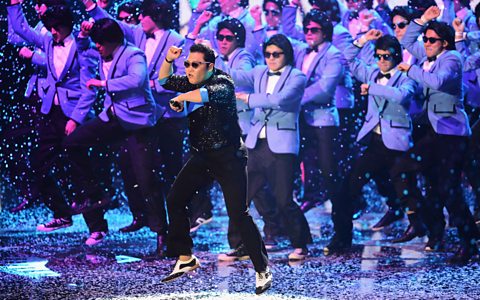
One iconic K-pop song you may recall is thanks to the artist PSY. This artist was responsible for the global earworm ‘Gangnam Style’ which dominated music charts and became the first video on YouTube to hit 2 billion views in 2014.
How many K-pop bands are there?
Today, K-pop continues to attract new audiences, through the power of social media. Popular groups can today use platforms to easily connect with their millions of K-fans and firmly position themselves as some of the world’s most beloved K-pop idols.
But how many K-pop bands are there? In recent years, we've seen several burst onto the music scene or as they say in the world of K-pop, 'debut.' This means an artist or a band has transitioned from a trainee to an idol and officially releases music or performs live under their music label.
Since the 1990s, there are believed to have been over 1000 K-pop idol groups, with hundreds still active today. Some of the biggest names to emerge in recent years are groups like BTS, BLACKPINK, TWICE, SEVENTEEN, Stray Kids, ITZY and ENHYPHEN.
K-pop bands usually have more than just a few members. If you've ever wondered which K-pop group has the most members, this is believed to be NCT, who have around 20 members divided into seven different sub-units.

What are some of the main features of K-pop music?
There are lots of different elements in K-pop that go into creating these high energy performances, but what are they and what is their purpose? Let's find out…
Choreography
One thing that sets K-pop apart from other musical styles is the big focus on choreography. In many music videos you will see groups dancing in a way that matches both the style of the song and the branding of the musician. No simple ‘two-step’ will be found in K-pop choreography, with movements often involving precision, formation changes, synchronisation and above all else, energy!
Multilingualism
Many Korean pop groups and artists will incorporate The ability to speak, understand, or use multiple languages. within their lyrics. Whilst often a mixture of Korean and English, this extends to other languages such as Japanese or Mandarin. By incorporating multilingualism within their music and performances, artists can hope to connect further with their fans across the globe, which may bolster their appeal.
Visuals
In K-pop, a ‘visual’ typically refers to the artist or people who are viewed as the most striking in appearance, often aligning with Korean beauty standards, such as having a youthful appearance and ‘glass skin’. These individuals may be seen as the ‘face’ of the group or be featured more heavily in music videos. Though, it is not just physical appearance that contributes to the visual appeal of these K-pop idols, their individual talents of singing and dancing, along with their charisma on stage adds to their status.
K-pop idols
Whilst the Korean pop industry has made significant strides in recent years, so has the musical output of ‘idols’, mostly in the form of girl groups and boy bands. Whilst the definitive answer to ‘who is the biggest K-pop idol?’ is debated by K-fans, factors such as popularity, vocal talent, appearance and global recognition can influence responses.
To become a K-pop idol, artists undergo vigorous training - sometimes taking years! This training incorporates elements of skill development in singing and dancing, as well as lessons in public speaking, learning modern foreign languages and how to build and sustain a positive personal brand. Some of the most popular idols include Jungkook from BTS, Jisoo from BLACKPINK and Hyunjin from Stray Kids.
Is Katseye K-pop?
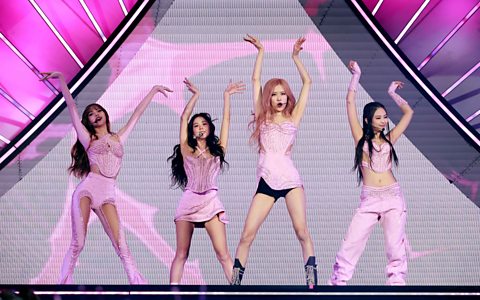
Consisting of six members - Lara Raj, Megan Skiendiel, Manon Bannerman, Sophia Laforteza, Daniela Avanzini and Yoonchae Jeung - girl band KATSEYE first formed back in 2023. The band were formed through the reality competition The Debut: Dream Academy.
A joint venture between South Korean entertainment label HYBE and American label Geffen Records, the competition saw 20 young women take part in singing and dancing missions, being judged by a panel of experts and online votes by fans, now known as EYEKONS. At a live finale show, the official members of KATSEYE were announced.
Their formation was documented in the Netflix series Pop Star Academy: KATSEYE. But are KATSEYE technically a K-pop group?
Well, the band is classed as a global girl group, rather than a traditional K-pop group. The process of creating KATSEYE saw members undergo a similar rigorous training and development system to traditional K-pop bands when it comes to vocals, choreography and performing.
KATSEYE have combined this training and experience with Western pop music production to form a multinational group, who sing predominantly in English. In 2024, the band officially debuted with their first single, Debut.
Since then, they have achieved viral TikTok success with songs like Touch and for dancing in a GAP campaign, Better in Denim, to song Milkshake by Kelis. Known for hits like Gabriella, Gnarly and PINKY UP, the band have won American Music Awards and performed at the 2025 Grammys, where they also received nominations.
In 2026, a feature-length music documentary, KATSEYE: WILD HEARTS, was released and the girl band embarked on their first worldwide tour. Members Manon Bannerman and Sophia Laforteza are currently on hiatus from the group.

Who made Kpop Demon Hunters?
The popularity of K-pop idols is not just limited to the music industry and has firmly embedded itself as a cultural phenomenon. Its standing has generated more interest in Korean culture, fashion and cuisine which has spread worldwide.
Moreover, the popularity of this sensation has led to more people taking an interest in learning the Korean language, with many fans using it to gain a better understanding of the lyrics and to connect more with Korean culture. The influence of K-pop can also be seen on screen across the globe, with some idols starring in A Korean drama, specifically a television programme produced in South Korea that are in the Korean language. and inspiring musical animations.
One example that has taken centre stage is the animated film 'K-pop Demon Hunters' in which the two fictional groups (the Saja Boys and Huntr/x) have topped the charts in the United States with the songs 'Your Idol' and 'Golden' beating the records of real-life K-pop groups!
Released in June 2025, the film, which has since made millions, slowly gained momentum before thousands of viral videos and memes appeared on social media. Created and directed by Maggie Kang and Chris Appelhans, the film was produced by Sony Pictures Animation for Netflix.
In the film, lead characters Rumi, Mira and Zoey are voiced by Arden Cho, May Hong and Ji-young Yoo. The names behind the Huntrix band's vocals are EJAE (Rumi), Audrey Nuna (Mira) and Rei Am (Zoey).
In August 2025, BBC News reported how KPop Demon Hunters had climbed Netflix's charts to become its most viewed movie ever. At the time, the Kpop Demon Hunters soundtrack also became the first to have four simultaneous Top 10 hits on the Billboard Hot 100.
In 2026, Kpop Demon Hunters won Best Animated Feature and Best Original Song for Golden at the Oscars.

Quiz: Which KPop Demon Hunter are you?
When will KPop Demon Hunters 2 come out?
In March 2026, BBC News reported how Netflix had announced a sequel to KPop Demon Hunters. At the time, director Maggie Kang said: "I feel immense pride as a Korean filmmaker that the audience wants more from this Korean story and our Korean characters.
"There's so much more to this world we have built and I'm excited to show you. This is only the beginning."
No date has been set yet - according to various sources, reports have speculated about a possible 2029 release - but we will have to wait and see!

K-pop terms you may not have heard of
- Aegyo – When an idol acts cute.
- Bias – A fan’s favourite member of a K-pop group.
- Bias-wrecker – A member of a K-pop group that makes fans question their favourite member or steals attention away from them.
- Comeback – When a K-pop group or artist releases new music.
- Maknae – The youngest member of the group.
- Nugu – A new or relatively unknown group or artist.
- Stan – An enthusiastic or dedicated fan.
- Visual – A member of the group known for their appearance, usually based on Korean beauty standards.
So, if you ever find yourself wondering “is K-pop any good?” we may be bias-ed, but we’d certainly think so!
This article was written in July 2025 and updated in October 2026