Key facts on diseases and body defences
Communicable diseases are infectious illnesses caused by microorganisms such as bacteria, viruses and fungi and can be passed from one organism to another.
The body defends against pathogens using barriers like skin and white blood cells, which destroy microorganisms using antibodies and phagocytosis.
Immunity develops when the body produces antibodies, either naturally through infection or artificially through vaccines, providing protection against future infections.
Antibiotics can treat bacterial infections, but overuse can lead to antibiotic-resistant bacteria, making some diseases harder to control.
Health and Disease
A communicable disease can be passed from one organism to another. It is also known as an infectious disease. It is caused by a microorganism – bacteria, virus or fungus.
A person free from both types of disease is described as being healthy.
What are the types of communicable diseases?
| Disease | Microorganism | Spread | Control/Prevention/Treatment |
|---|---|---|---|
| HIV (leading to AIDS) | Virus | Exchange of body fluids during sex. Infected blood. | Prevention: Using a condom. Drug addicts not sharing needles. Control: Drugs currently control the condition. |
| Cold/flu | Virus | Airborne | Prevention: Flu vaccination. |
| Human papilloma virus (HPV) | Virus | Sexual contact | Prevention: HPV vaccination (offered to 12–13 years old girls and boys). Protects women and girls against cervical cancer. |
| Salmonella food poisoning | Bacterium | Contaminated food | Prevention: Always cook food thoroughly. Do not mix cooked and uncooked foods. Treatment: Antibiotics. |
| Tuberculosis | Bacterium | Airborne | Treatment: Antibiotics. |
| Chlamydia | Bacterium | Sexual contact | Prevention: Using a condom. Treatment : Antibiotics. |
| Athlete’s foot | Fungus | Contact | Prevention: Avoiding direct contact with spores (eg wear flip flops in changing rooms). Treatment Anti-fungal treatment. |
| Potato blight | Fungus | Spores are spread in the air from plant to plant (especially in humid, warm conditions). | Prevention: Crop rotation. Treatment: Fungicide. |
Preventing entry
Understanding the body's defence mechanisms
Defence mechanisms help the body protect itself against the entry of microorganisms that cause communicable diseases.
These include:
- the skin, which is a barrier to microorganisms
- mucous membranes in the nose, ears and eyes which trap microorganisms
- blood clotting, which stops blood escaping and prevents the entry of microorganisms where the skin has been damaged
The entry of a microorganism may cause us to be sick while our body fights the infection.
If a microorganism does enter, white blood cells will kill them.
Antigens and antibodies
All cells have markers on their surface called antigens that have a specific shape.
Lymphocytes (white blood cells) make antibodies that are complementary to the antigen.
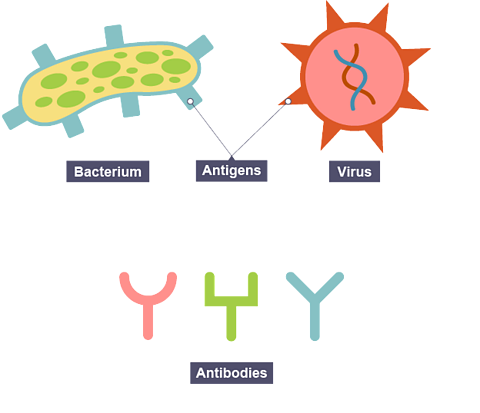
When the body recognises a foreign A marker on a microorganism that causes the body to produce antibodies., lymphocytes (white blood cells) produce A chemical produced by a lymphocyte in response to an antigen., which are complementary in shape to the antigen.
An antibody will only work on one type of microorganism because of this complementary shape.
Antibodies attach to the antigen - an antibody-antigen reaction.
Antibodies immobilise microorganisms by clumping them together.
Immobilisation of the microorganism reduces symptoms and prevents the spread of infection.

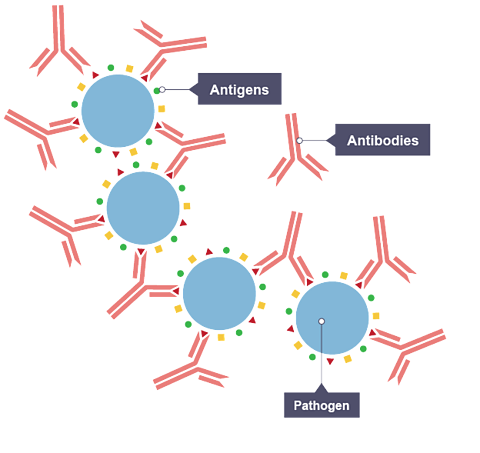
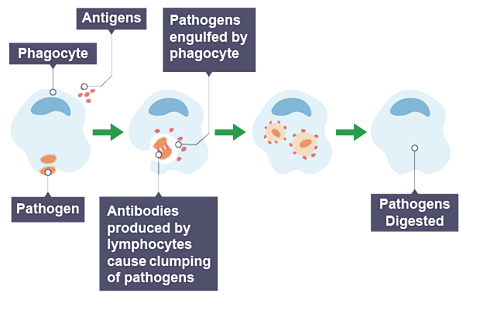
The clump of microorganisms is then destroyed by The process of the ingestion of bacteria or other material by phagocytes..
Phagocytosis is when a phagocyte (another type of white blood cell) engulfs and digests the microorganisms.
Enzymes within the phagocyte digest the microorganism.
Primary and secondary responses
The infected individual will be sick while White blood cells which attack pathogens by producing antibodies. work to produce enough A chemical produced by a lymphocyte in response to an antigen. to provide immunity.
This is the primary response.
During this response, the body will also make memory lymphocytes that remain in the body for years.
If the same pathogen is encountered again, memory lymphocytes produce high numbers of antibodies very quickly.
This is the secondary response and it prevents the person getting sick again from that pathogen or disease.
The person is now immune from that disease.
Immunity
Immunity means your body can fight off a disease. This happens when you have enough Proteins made by white blood cells that are specific to an infection. They help fight off the illness., which can protect you from getting sick from that disease.
There are two types of immunity:
Active immunity
This is when the body’s lymphocytes are activated and produce the specific antibodies needed to fight the pathogen.
Active immunity is:
slow acting
provides long-lasting protection
The primary response when a microorganism enters the body is described as natural active immunity.
A substance that stimulates the body to produce antibodies to provide immunity against a disease. provide artificial active immunity.
Passive immunity
This is when ready-made antibodies, from another source, are introduced to the body.
Passive immunity is:
fast acting
only lasts a short period of time (no memory lymphocytes are made)
Breastfeeding provides a baby with natural passive immunity.
Anti-venom provides artificial passive immunity after a poisonous bite.
Antibiotics
Antibiotics are chemicals produced by fungi that kill or prevent the growth of bacteria.
Penicillin was the first antibiotic. It was discovered by Alexander Fleming in the 1920s when he noticed that bacteria didn't grow near a mould (fungus).
He concluded that the mould released a substance that prevented bacterial growth - this was penicillin.
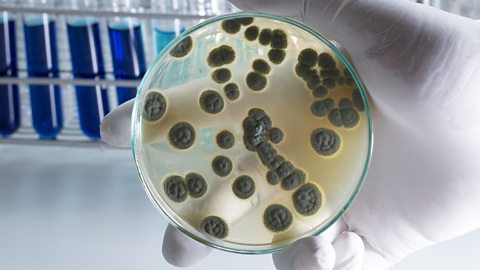
In the 1940s, scientists Florey and Chain produced pure penicillin and began large-scale production of penicillin.
Since then, many more antibiotics have been discovered.
Penicillin and other antibiotics are produced commercially where fungi are grown in carefully controlled conditions (correct temperature, pH and nutrients) in A tank containing nutrients, which is used to grow large numbers of bacteria or yeast..
What are medical trials?
Preclinical trials
Before a new drug can be made available for public use, it must undergo rigorous testing to ensure it is safe and effective.
There are various stages:
1. Preclinical Trials:
- conducted in laboratories
- involves in vitro testing - drug is tested on cells and tissue
- involves animal testing - drug is tested on animals to see how well the drug works on an entire living organism.
Preclinical trials are necessary to:
- check if the drug is toxic (poisonous)
- check how effective it is
2. Clinical Trials:
- drug is tested on small number of healthy volunteers first, then a larger group
Clinical trials are necessary to:
- assess how the drug works in humans (rather than other species)
- determine correct dosage required
- find out side effects if any
If these trials are successful, the drug can be licensed.
Antibiotic-resistant bacteria
Some bacteria have developed resistance to antibiotics, meaning the drugs can no longer kill them.
The overuse of antibiotics is responsible for this process by allowing bacteria to mutate and become resistant.
Certain bacteria, known as superbugs (eg MRSA), are resistant to multiple antibiotics, making infections caused by them difficult to treat and posing serious health risks.
Reducing superbugs
Hygiene: regular handwashing and cleaning hospital environments.
Controlled antibiotic use: prescribe antibiotics only when necessary.
Isolation: keep patients infected with ‘superbugs’ separate to prevent spread.
Why superbugs are hard to eradicate:
bacteria can mutate quickly
resistant strains survive and multiply
limited development of new antibiotics
Misuse of drugs - alcohol
Many people drink alcohol in moderation and are unlikely to suffer serious harm.
Binge drinking can cause harm to the individual and others. Binge drinking is when a large amount of alcohol is consumed over a short period of time.
Drinking alcohol excessively over a long period of time can damage the liver and other organs.
Drinking heavily during pregnancy can cause serious brain damage to the foetus, known as foetal alcohol syndrome.
Misuse of drugs - tobacco
| Cigarette substance | Harmful effect |
|---|---|
| Tar | Causes bronchitis (narrowing of the bronchi and bronchioles). |
| Causes emphysema (alveolar damage reducing the surface area of gas exchange). | |
| Causes lung cancer (abnormal cell division). | |
| Nicotine | Addictive and affects heart rate. |
| Carbon monoxide | Combines with red blood cells reducing their oxygen carrying capacity. |
Smoking bans have been effective at reducing passive smoking and encouraging people to stop smoking.
E-cigarettes help some quit smoking. Critics argue they may encourage non-smokers, especially children, to start using nicotine, causing health risks and long-term effects of vaping are not yet fully understood.