6 Minute English now comes with a video! It's the same programme that you know and love, but now you can see us!
_____________________________________________________________________________________________________
Download a free 6 Minute English worksheet and transcript!
Try our free interactive quiz!
______________________________________________________________________________________________________


Introduction
Do you ever feel it is too hot to sleep? With climate change gradually increasing world temperatures, people across the world are becoming increasingly affected by hot weather. In many locations, air conditioning is used to help cool down homes and workplaces, but not everyone has access to this. And it isn't just about getting a good night's sleep – extremely hot weather can be a serious health risk. Georgie and Neil discuss this and teach you some new vocabulary.
This week's question
Modern air conditioning was invented in 1902, but what was it originally used for?
a) to protect people in hospitals
b) to dry ink
c) to clean air
Listen to the programme to hear the answer.
Vocabulary
life-saving
used to stop people from dying
inhabit
live in
the grid
the system or network that distributes electricity across different locations
vicious cycle
situation where one problem leads to another problem, which then makes the first problem worse, leading to a chain of events where each cause and effect makes the original problem even worse
passive cooling
making a building cooler without using a lot of power
shading
blocking the sun's light and heat

TRANSCRIPT
Note: This is not a word-for-word transcript.
Georgie
Hi Neil.
Neil
Hi Georgie.
Georgie
So, Neil, we've just had a really hot summer in the UK. Did you have air conditioning in your house?
Neil
I didn't have air conditioning in my house. I wish I had, because it was really hot and I couldn't sleep.
Georgie
No, I had one of those big fans, which didn't always do its job. But there is a really serious side to this. Heat records continue to be broken around the world. You may be feeling that summers are getting too hot. Have you been using air conditioning more to cope? If so, you're not alone. Experts are predicting that ten new air conditioning units will be installed every second for the next 30 years. Today on 6 Minute English, we're talking about this and whether air conditioning really is the best way to cope with a warming world.


Georgie
OK. As always, Neil, we'll start with a quiz question. So, modern air conditioning was invented in 1902, but what was it originally used for? Is it:
a) to protect people in hospitals,
b) to dry ink, or
c) to clean air?
Neil
Well, I have absolutely no idea, Georgie. I'm going to guess and say c) clean air.
Georgie
OK, Neil, we'll find out the answer at the end of the programme.
Neil
OK. Georgie, we've been talking about how uncomfortable the hot weather can make you feel in the summer. Is air conditioning all about comfort, though?
Georgie
No, it's not just about comfort. Summer heat can be a real health issue as well. It's thought that across Europe, over 30,000 people died as a result of this summer's heat. Dr Radhika Khosla, an expert in climatology, told BBC World Service's The Climate Question how important air conditioning can be:
Dr Radhika Khosla
Actually, air conditioning is life-saving. You know, in Singapore, when Lee Kuan Yew was asked what made civilisation possible in the tropics, he said it was air conditioning. And there are so many large parts of the world where we would not be able to inhabit if we did not have air conditioning.
Neil
So, Radhika is saying that air conditioning is life-saving. It literally stops people from dying.
Georgie
Yes, and she makes the point that there are many parts of the world that we would not be able to inhabit – that means live in – without this technology.
Neil
OK Georgie. So, it sounds like air conditioning has a lot of good things about it. Is it all positive, though?
Georgie
No. There are some serious downsides. So, one big problem with air conditioning is the amount of energy it uses. Let's hear more from Radhika talking to The Climate Question:
Dr Radhika Khosla
When air conditioning becomes the first, go-to solution for how we deal with the increased, prolonged and extreme heat that we're going to face and are facing, it places stresses across the system that are not able to be met. So, you know, we're going to see the grid collapse. We're going to see emissions rise. We're going to see all kinds of other impacts that actually are quite detrimental. And we reach a vicious cycle, because then you're in a world where it's getting warmer. We're using air conditioning to be able to protect ourselves. That's leading to more emissions and more energy use. That is then making the world warmer. And then we need more air conditioning.
Neil
We heard about the grid. The grid is the network that distributes electricity across towns, cities and countries. If people are trying to use more electricity than it can cope with, then the grid can collapse – you get power cuts, which is when you can't get any electricity.
Georgie
We heard that air conditioning creates emissions, which can lead the world to warm up, which means we then need more air conditioning. This makes the world even warmer and so on. And Radhika calls this a vicious cycle. A vicious cycle, or a vicious circle, is where a solution to a problem actually makes it worse, which means you have to do more and that makes the problem even worse still.
Neil
OK. Well, that sounds like a bit of a problem. What are the solutions?
Georgie
Well, Radhika says that there are some things we should try first before using air conditioning, which will still be important. Here she is again talking to The Climate Question.
Dr Radhika Khosla
So, one of the most important things is to do passive cooling first. Now, passive cooling is when we take steps to provide thermal comfort that are not energy intensive. Some of the most important ones are first to cut solar gain, which is through things like shading.
Neil
Passive cooling is where you cool your house down without using a lot of energy.
Georgie
Yes, heat from the sun can be blocked by shading, which could be with trees, curtains or blinds.
Neil
OK Georgie. So, passive cooling and shading – that sounds really easy. Is it that simple?
Georgie
No, that's not all we have to do. Radhika also talks about the importance of using sustainable energy to power the air conditioning that we still will need.
Neil
OK Georgie. It's time, I think, for you to give the answer to the question you asked us.
Georgie
Yes, Neil. I asked you what modern air conditioning was used for when it was first invented in 1902.
Neil
And I had a wild guess. I said c) to clean air. But you know what? I'm feeling pretty confident now.
Georgie
Sadly, you are incorrect. The correct answer was b) to dry ink. It was invented by Willis Carrier at a printing company in Brooklyn, New York.
Neil
OK. Let's recap the vocabulary we learned in this programme, starting with life-saving, which describes something that stops people from dying.
Georgie
If it's possible to inhabit somewhere, that means it's possible to live there.
Neil
The grid is the system or network that distributes electricity across towns, cities, and countries.
Georgie
A vicious cycle is where a solution to a problem also makes it worse, meaning the problem just keeps getting even worse as you try to fix it.
Neil
Passive cooling is where you make a building cooler without using a lot of power.
Georgie
And shading is blocking the sun's light and heat.
Neil
Once again, our six minutes are up. Test what you've learned with the worksheet on our website, bbclearningenglish.com.
Georgie
Thank you for joining us. Goodbye.
Neil
Goodbye!

What do you think of the new version of 6 Minute English? Email us at [email protected].
Next
Find an A-Z list of our programmes.
Find more programmes for your level here.
Practise your reading skills with The Reading Room.
Latest 6 Minute English

Is aircon the answer to a heating world?
Episode 261029 / 29 Oct 2026
Do you have air conditioning in your house?

What should you eat for a better night’s sleep?
Episode 261022 / 22 Oct 2026
How much sleep do you get each night?


Can apps teach you a language?
Episode 260910 / 10 Sep 2026
What's better for learning languages – an app or a class?

Climate change and extreme weather
Episode 260903 / 03 Sep 2026
Every year we see damage, death and destruction caused by hurricanes, cyclones and typhoons - tropical storms. Is climate change making this impact worse?


Sharing the road with driverless cars
Episode 260820 / 20 Aug 2026
Would you trust a robot to drive you around a city?

Who does the housework?
Episode 260813 / 13 Aug 2026
When you were growing up, did your mum or dad do more household chores?
How do climate scientists make predictions?
Episode 260806 / 06 Aug 2026
What is the difference between a prediction and a projection?
The Enhanced Games
Episode 260730 / 30 Jul 2026
Would you watch a sport if you knew the athletes had taken drugs?


What's in a footballer's brain?
Episode 260716 / 09 Jul 2026
How do footballers cope with high-pressure scenarios like penalties and corners?



Stress-free family meals
Episode 260625 / 25 Jun 2026
What foods did you dislike when you were growing up?

Limiting screen time for children
Episode 260618 / 18 Jun 2026
Children are spending too much time with electronic devices.

How advertisers make us spend money
Episode 260611 / 11 Jun 2026
When was the last time you bought something you didn't need?



How reading shapes your brain
Episode 260514 / 14 May 2026
Can learning to read alter the way your brain works?

Searching for life on another planet
Episode 260507 / 07 May 2026
Does life on another planet exist?
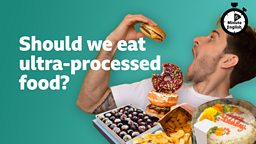
Should we eat ultra-processed food?
Episode 260430 / 30 Apr 2026
Ultra-processed food can be tasty, but what is it doing to our health?


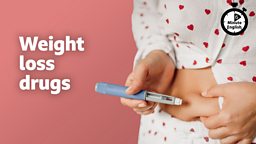
Weight loss drugs
Episode 260326 / 26 Mar 2026
How do weight loss drugs like Ozempic and Mounjaro help people lose weight?
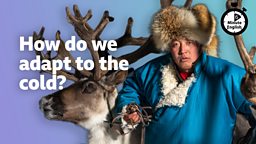
How do we adapt to the cold?
Episode 260319 / 19 Mar 2026
Would you prefer to be too hot or too cold?
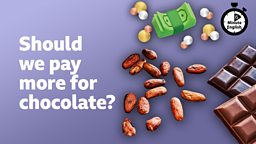
Should we pay more for chocolate?
Episode 260312 / 12 Mar 2026
Is chocolate becoming more expensive?
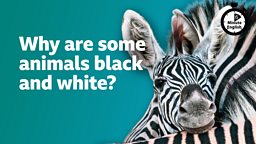
Why are some animals black and white?
Episode 260305 / 05 Mar 2026
The answer is not as black and white as you might think!




Why are billionaires building bunkers?
Episode 260129 / 29 Jan 2026
Is the end of the world closer than we thought?

Scared of speaking English?
Episode 260122 / 22 Jan 2026
Beth and Pippa talk about why we often find speaking a new language scary.
What English phrases really mean
Episode 260115 / 15 Jan 2026
Why don't British people say what they mean, or mean what they say?