USA (1918-1968)
What was America's 'Open Door' immigration policy?
During the 19th and early 20th centuries America operated an ‘Open Door’ policy to immigration. Millions of migrants, many from Europe, arrived to make a new life in the USA.

Why did US attitudes to immigration change after 1918?
After World War One ended, increasing economic and social concerns led many Americans to question the nations 'Open Door' immigration policy.

Obstacles to civil rights up to 1941: legal and political obstacles
In Southern states of the US, there were many legal and political factors that limited the civil rights of black Americans.

Obstacles to civil rights: the Great Migration and division
Black Americans in Southern states faced discrimination. For many a new life in Northern US cities promised a better life and more freedom.

Obstacles to civil rights up to 1941: violence and prejudice
Many black Americans in Northern US cities experienced prejudice and inequality. Racial tensions in urban areas led to violent race riots in the 1920s.

Reasons for the economic crisis: US policy and international problems
After WW1, the US economy was booming. A series of Republican presidents cut taxes and de-regulated business. By the end of the 1920s, the US economy was facing series problems.

Reasons for the economic crisis: Overproduction and underconsumption
After WW1, US factories created a range of new goods which Americans bought with borrowed money. By the end of the 1920s, overproduction and overconsumption became serious issues.

Reasons for the economic crisis: Banking and the Wall Street Crash
In October 1929, the panic selling of shares on Wall Street led to banking and economic collapse. Across the nation, millions of Americans were left in serious financial hardship.

Video playlist
Why did US change its 'Open Door' immigration policy? Video
Why did America abandon its 'Open Door' immigration policy in the 1900s?
Obstacles to US Civil Rights. Video
Black Americans faced severe racial discrimination. Despite this many fought for Civil Rights.
Causes of the US economic crash of the 1930s. Video
In the 1930s the US economy crashed leading to widespread hardship and poverty.
What was Roosevelt's 'New Deal'? Video
President Roosevelt introduced his 'New Deal' reforms to help boost the US economy
US Civil Rights after 1945. Video
After the end of WWII, black Americans continued the fight for their civil rights.
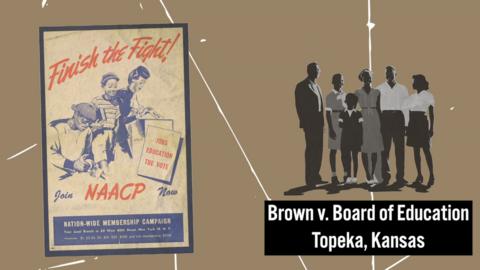
Black civil rights up to 1968. Video
Throughout the 1950s and '60s, black civil rights groups fought and won important battles.
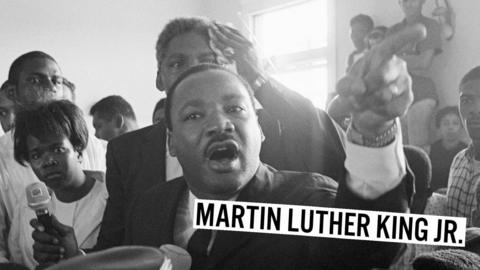
The 1963 March on Washington. Video
The 1963 March on Washington to highlight racial injustice.
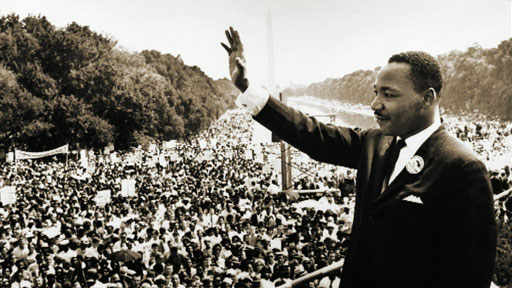
Montgomery Bus Boycott. Video
How the arrest of Rosa Parks led to the Montgomery Bus Boycott in America.
Links
- External linkExternal link
- External linkExternal link
- External linkExternal link
- External linkExternal link