Quick version
World War One boosted American industry and the economy:
New assembly line production methods allowed factories to make products faster and more cheaply.
- Demand in American factories increased, increasing profits and allowing expansion.
- Wages increased and standards of living improved for many workers and their families.
- Growth was fuelled by consumerism - people buying new goods such as radios, cars, and fridges.
- US unemployment fell.
During the 1920s three Republican presidents operated a 'laissez-faire' policy:
- Reduced government regulation.
- Greater freedom for businesses.
Republicans cut taxes:
- To encourage investment and economic growth.
- Wealthy individuals and large businesses benefited most.
- Poorer Americans saw little improvement.
The Fordney-McCumber Tariff (1922) imposed high taxes (tariffs) on imports to protect American businesses from foreign competition.
- These tariffs made it harder for European countries to sell goods in the USA.
- This reduced international trade and made it more difficult for countries to repay debts owed to America.
- Other countries responded by introducing their own tariffs on American goods.
Video – The US Great Depression
Watch this Higher video to explore the causes of the US economic crash of the 1930s.
When Herbert Hoover won the Presidency in 1928, he was in a confident mood.
“Our people have more to eat, better things to wear, and better homes. Wages have increased, the cost of living has decreased. The job of every man and woman has been made more secure!”
His party, the Republicans, believed in a ‘laissez-faire’ policy – that governments should be as little involved as possible in how the country was run, and that business should be left unregulated…
And it had worked! Since World War I, the economy had been booming…
America’s new assembly lines meant that goods could be made more quickly, and more cheaply, than ever before. But by 1929, problems were starting to appear…
The rise in factories' ability to make goods cheaply and quickly wasn’t matched by the public’s ability to keep buying.
Warehouses started filling with unsold goods. Falling sales meant falling profits. There was only one way that most companies could deal with this – by sacking workers.
Many of those finding themselves suddenly unemployed were in debt. In the boom years, people had been borrowing to buy new consumer goods, such as vacuum cleaners, radio sets, and cars.
And stock market trading had become a craze.
Buying and selling shares – often using borrowed money - became a ‘get rich quick’ scheme, which seemed too good to miss out on.
The entire economy was building up debt that couldn’t be paid off. In October 1929, some more experienced investors started selling off shares.
The drop in prices created a general panic, with everyone trying to sell at once. As the stock market crashed, the effects spread…
As banks ran out of money and collapsed, the financial system almost ground to a halt.
The impacts were felt everywhere – businesses went bankrupt, and people lost their homes.
Unemployment had been 1.5 million in 1929. By December 1932, 12 million people were out of work – and desperate
In what had been the richest nation on Earth, farmers couldn’t afford to harvest their crops, and it became a common sight to see people scavenging rotting food from rubbish dumps.
America's booming 1920s economy
After WW1, the economy of the United States was booming. It seemed as if the American Dream of happiness and prosperity for all had finally come true.
By the end of the 1920s, however, America was in trouble. Its stock markets had crashed and millions of people had been plunged into hardship and poverty. So, what happened?
How did World War One affect America's economy?
 Image source, HUM Images / Getty
After the end of World War One, it was clear that the effect of the war on Germany, France, Great Britain and Russia was devastating, both to their economies and in the loss of human life.
Productivity across Europe had fallen during the war, damaging businesses and economies.
America came out of the war relatively unscathed. Great industrial expansion took place and as a result the USA overtook Germany and Britain in the rate of industrial production.
The war gave an enormous boost to US industry. Countries bought American goods, and continued to do so when the war was over.
The USA was a real economic winner of the war:
- industrial production grew
- more jobs were created
- wages increased and the standard of living improved for many workers during the years 1920-1929
- there were sufficient raw materials and workers to satisfy demand for new products
Image source, HUM Images / GettyOrigins of the US Great Depression
 Image source, Bettmann / Getty
Although the American economy was booming, groups such as African-Americans, women and farmers did not enjoy the prosperity of the The name given to a period of economic prosperity and optimism during the 1920s. Culturally, the period saw the popularity of new forms of music such as jazz, and bold new fashion styles..
Although some women were able to enjoy more independence and wear the latest fashions, the reality was that most women were poorly paid and were employed in roles such as cleaners or waitresses.
More than 60% of Americans lived below the poverty line. Economic growth increased the gap between the rich and the poor, rather than reducing it.
Image source, Bettmann / GettyWho were the Republic presidents during the 1920s?
 Image source, Hulton Archive / Getty
Throughout the 1920s the US was governed by a succession of Republican presidents representing the views of business and the Wall Street stock market:
- Warren Harding, 1920-23
- Calvin Coolidge, 1923-28
- Herbert Hoover, 1928-32
In 1920, Warren Harding campaigned with the slogan, "Return to normalcy." His message was that the war was over and that America should return to the business of economic growth.
The main reason for the popularity of the Republicans in the 1920s, was that many Americans were better off than they had ever been before. The USA was prospering and the Republicans claimed that much of it was the result of their policies.
Calvin Coolidge, who became president after the sudden death of Harding, said,
The chief business of the American people is business.
Image source, Hulton Archive / GettyWhat were the Republican economic policies in the 1920s?
Key Republican economic policies in the 1920s allowed the USA to become the leading industrial nation of the early 20th century but also led to the economic crisis of 1929.
Laissez-faire
Most Republicans believed that governments should not get involved in the day-to-day running of the economy.
They believed that if businessmen were allowed to make the decisions that affected their businesses, then higher profits, more jobs and good wages would be the result.
This important Republican policy was known as laissez-faire: ‘to leave alone’.
Deregulation of business
Freeing up businesses to make their own decisions meant that there would be less oversight or interference from government. Republicans felt that government could be smaller and cheaper. Attempts to save the government money meant there were cutbacks in the government agencies that regulated business.
- Businesses were left to carry on with no-one checking up on them.
- Laws concerning corrupt business practices, such as price-fixing, were often ignored.
- Mergers between companies took place, which resulted in companies monopolising industries. This disadvantaged small businesses.
Lack of regulation could have serious effects. For example, no government authority stopped child labour in the textile mills of the south where a 56-hour week was common and wages rarely rose to more than 18 cents per hour.
Tax reductions
Throughout the 1920s, Republicans pursued a policy of tax reduction. They believed reducing taxes, especially for high earners and businesses would encourage more spending, investment and economic growth.
Tax rates had risen dramatically during World War 1 to fund the war effort. In 1918, any personal earnings over one million dollars were taxed at 77% (ie 77 cents were paid in tax for every dollar over one million dollars earned). By 1929, the top rate of tax was reduced to 24% for all earnings over $100,000.
- Taxes were reduced for businesses and those who earned the highest salaries.
- Taxes on high incomes and company profits were drastically reduced.
- The government reduced federal tax significantly in 1924, 1926 and in 1928.
Large-scale industrialists benefited from tax rebates and deferments (putting off payment) on loans. However, these tax cuts primarily benefited the wealthy with the poor hardly benefitting at all.
International problems affecting the US in the 1920s
Protectionism
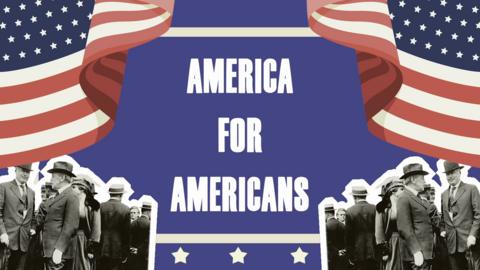
One of the most significant Republican policies of the 1920s was the introduction of protective tariffs (tax) on the import of foreign products.
The ‘Fordney-McCumber’ Tariff Act, 1922 set tariffs at a record level of 40%. This made foreign imports too expensive for Americans to buy.
This was known as ‘protectionism’ and almost guaranteed that Americans bought products made in America.
This ‘price-fixing’ protected American businesses from cheap foreign imports, but failed to deal with the consequences of foreign countries retaliating by blocking American imports to their countries.
International debt
Another economic problem was the amount of international debt that America was owed by other nations.
The USA had lent over $10 billion to its allies during the war. After the war, American banks lent money to Germany to pay reparations to countries such as France and the United Kingdom.
Due to the Republican policy of high tariff protectionism, European countries found it difficult to export and sell their goods in America. These countries struggled to raise money to pay back their US loans.
Test what you have learned
Quiz
Recap what you have learned
World War One boosted American industry and during the 1920s the economy was booming.
The USA was led by three Republican presidents during the 1920s:
- Warren Harding
- Calvin Coolidge
- Herbert Hoover
Republicans were popular. There was economic growth and many Americans enjoyed rising living standards.
Republicans had a policy of 'laissez-faire':
This meant the government interfered as little as possible in business.
Businesses enjoyed greater freedom.
But it became easier for monopolies, unfair practices, and poor working conditions to develop.
Republicans cut taxes to encourage investment and economic growth.
- Wealthy individuals and large businesses benefited most.
- Poorer Americans saw little improvement.
The Fordney-McCumber Tariff (1922) imposed high taxes (tariffs) on foreign imports to protect American businesses from foreign competition.
- These tariffs made it harder for European countries to sell goods in the USA.
- This reduced international trade and made it more difficult for countries to repay debts owed to America.
- Other countries responded by introducing their own tariffs on American goods.
More on USA (1918-1968)
Find out more by working through a topic
- count9 of 9