Woman's harassment story highlights 'safeguarding loophole'

 BBC
The system designed to protect children and vulnerable adults "has got its eyes closed" to potential abusers who have been found to have committed rape, domestic abuse or harassment in civil and family courts, a campaign group has warned.
Police are not routinely informed about civil and family judgements, findings or agreements, meaning they're often not included on Disclosure and Barring Service (DBS) checks which employers use to understand employees' backgrounds.
"It's a massive national safeguarding loophole", said Bev Nickson from Lancashire, who wants to change the DBS system after taking a former neighbour to court over harassment.
The Home Office did not comment on the concerns.
Lawyer Rachel Horman-Brown KC, who specialises in domestic abuse cases, told the BBC she was "absolutely convinced" that "dangerous people" with civil findings against them had "fallen through the cracks" and been able to work with children or vulnerable people.
Civil courts, which include county courts and the High Court, deal with disputes between people or organisations – and are separate from magistrates and crown courts which deal with criminal prosecutions.
Civil and family court judgments are made "on the balance of probabilities" - a lower burden of proof than in criminal courts, where a finding of guilt requires the jury to believe "beyond reasonable doubt" that the offence has been committed by the defendant.
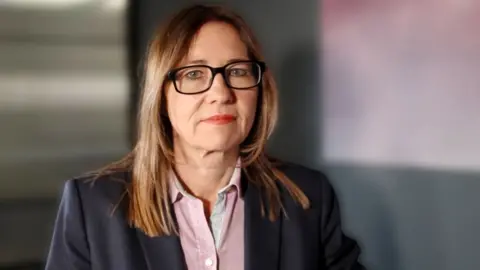
In family court proceedings, Horman-Brown said "the court could make a finding that a dad has raped the mother, subjected her to ten years of sustained coercive control, and the judge may make specific findings about what that was and how the mother was terrorised".
She said such details would often not feature on DBS certificates, because "the police are just not aware of the vast majority of findings and orders that are made within the family courts".
She is campaigning to change the DBS system along with Nickson, who began a campaign called 'Change the Check' after taking a former neighbour to court over alleged harassment.
She said her family was "being followed" and "watched every day" by the former neighbour, who the BBC is not identifying.
"I had no escape from it, my home was not my sanctuary, for three years", she added.
The action culminated in a hearing at which the former neighbour agreed not to physically intimidate, communicate with, film or make social media posts about Nickson or her family.

Breaching the undertaking could amount to a criminal offence, but Nickson realised the police would not automatically be informed of its existence – meaning they would not be able to include it on a DBS check.
"It's a huge national safeguarding loophole because who assesses that risk – if the police never get to see it?" she continued.
"It's just filed in a court invisible to everyone else."
DBS certificates are compiled by police forces and outline people's previous convictions and whether they're barred from working with children or vulnerable adults.
"Enhanced" DBS checks can also include police cautions and warnings, and can include details from civil or family court proceedings if the police are aware of them and consider them relevant.
Family court judges can make special directions if they want their judgments, or a note about their proceedings, to be brought to the attention of the police. But the procedure is not automatic.
'Effective safeguarding'
Unlock, a charity for people with criminal records, said it supported examining how serious safeguarding information was shared appropriately between agencies, including whether clearer guidance was needed.
"Any changes must preserve individual assessment, proportionality and the right to challenge information," said Paula Harriott, the charity's chief executive.
"A DBS certificate can determine whether someone can work, volunteer or rebuild their life.
"We should not create a system in which allegations or civil proceedings automatically become lifelong barriers to employment.
"Effective safeguarding and fair treatment must go hand in hand."
"It seems that the system has got its eyes closed" to "cases every year where there are really serious allegations and findings being made", Horman-Brown said.
Their campaign is also calling for new guidelines or an independent panel dictating when to findings from civil or family court proceedings should be disclosed on DBS checks.
Both also acknowledge that civil court findings shouldn't necessarily stop someone getting a job that requires a DBS check – "it's just one piece of the jigsaw for (employers) to make that assessment", Horman-Brown said.
Listen to the best of BBC Radio Lancashire on Sounds and follow BBC Lancashire on Facebook, X and Instagram. You can also send story ideas via Whatsapp to 0808 100 2230.