Vulnerable 'at risk' as drug needle site closes

 BBC
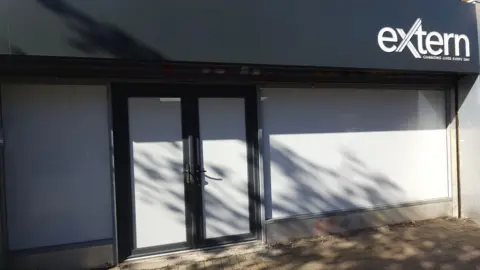
A drug needle exchange in Belfast is set to close within days because the charity which runs the service is losing its city centre premises.
The exchange, run by Extern, allowed people who inject heroin or cocaine to safely dispose used needles, receive clean needles and access health services.
The service will shut on 2 November and move to a "significantly reduced street-based service" following the loss of Extern's Royal Avenue premises.
The charity described the needle exchange as a "life-saving service" and warned that its closure meant vulnerable people would have "nowhere to go" to access support.
"The people who use this service are someone's son, daughter, brother, sister, parent or friend," said Mal Byrne, Extern's director of harm reduction and mental health services.
"They are members of our community, and, for many, this service is one of the few places where the door is open for them and where they can ask for help without judgement.
"That door is now closed until a space is secured to operate from."
 Extern
 has also warned that the closure may mean substance use becomes more visible to the public in the city centre, along with an increase in drug-related litter.
The charity's premises is to be redeveloped as part of the Belfast Stories project and Extern has tried for more than a year to find an alternative site in the city centre.
The search was assisted by Belfast City Council, the Public Health Agency (PHA), the Department of Health and landlords but a new location is yet to be found.
'13,000 discarded needles removed'
In addition to clean needles, the exchange provided a wound-dressing service and advised the vulnerable about accessing temporary accommodation and healthcare.
"Loss of a premises means people who need support to reduce harms from substance use have nowhere to go to access life-saving harm reduction advice and interventions, healthcare support and wider practical assistance," Byrne said.
"This is a life-saving service. This work will be suspended."
The forthcoming closure is happening at a time when cocaine use is believed to be on the rise in Belfast city centre, according to Extern.
"We suspect that there are between 1,000 and 1,500 people at any one-time experiencing difficulties with their drug use," the charity said.
"Last year alone, almost 20,000 used needles were safely returned by individuals who came to the premises on Royal Avenue," it added.
"Extern's city centre outreach team removed more than 13,000 discarded needles from Belfast's streets.
"This is an increase of roughly 20% from previous years."

Independent councillor Paul McCusker warned the closure puts vulnerable people "at even greater risk" and he has lobbied the council to explore alternative locations.
"I am deeply concerned that any reduction in this service will have a devastating impact on the people who rely upon it," he said.
"I have known individuals who have suffered life-changing consequences as a result of addiction, including the loss of limbs, and sadly, the loss of life itself.
"Belfast is currently in the midst of a drug epidemic, yet the political response has not reflected the scale of the crisis."
McCusker founded a soup kitchen in north Belfast in 2017 and regularly campaigns on issues regarding homelessness, poverty and addiction.
"Over recent years, we have witnessed a substantial increase in the number of people injecting drugs, which has led to an increased risk of blood-borne viruses, serious infections, abscesses, and addiction-related health complications," he said.
McCusker added needle exchange services "play a vital role in reducing harm" and insisted the "fears and misconceptions" surrounding them must be challenged.
"They provide an opportunity for drug support workers to engage with individuals, build trust, minimise health risks, and ensure that those who need help can be referred to appropriate treatment and support services."
How often are needle exchanges used?
The PHA commissions charities and participating pharmacies to deliver the Enhanced Needle and Syringe Exchange Service (NSES) across Northern Ireland.
In 2024-2025, a total of 32,667 transactions were recorded by the NSES in Northern Ireland, an increase of 7.4% on the year before.
About 721,000 needles and syringes were given out, which is a 7.5% increase compared with the previous year.
The PHA said needle exchange sites "are located in areas where there is an existing pattern of injecting behaviour"
"Providing services locally is vital, as people who inject substances are often vulnerable, may be in poor health, can be dealing with complex social issues, and may be without local access to sterile equipment and advice.
"So support needs to be targeted in a way which maximises access.
"Needle exchanges are particularly valuable for engaging these people, because it may be the only service they are willing to use and provides opportunities to direct them to additional support and information," the PHA added.