Health watchdog finds progress made following service suspension but further improvement required

 Pacemaker
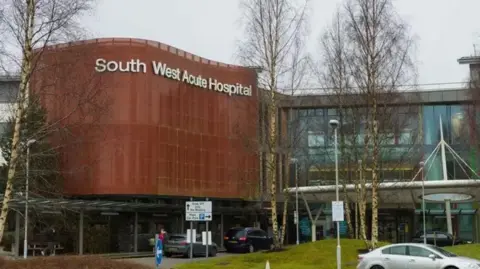
A report by a health watchdog has found that progress has been made in a number of areas following the temporary suspension of emergency general surgery at an Enniskillen hospital.
The report by the Regulation and Quality Improvement Authority (RQIA) which carried out unannounced inspections at the South West Acute Hospital and Altnagelvin Hospital between November 2025 and February 2026 also identified four areas that needed further improvement.
While staff responses to RQIA were limited, the report also detailed some staff concerns over patient transfers, ambulance delays and contentious working relationships between hospital staff and ambulance crews.
The Western Trust said RQIA recognised "the significant progress" being made and that the trust was "committed to maintaining safe services".
In data it provided to the RQIA, the trust said that in a review of 20 incidents of ED to ED transfer it had found no evidence of patient harm.
The report's findings have sparked renewed calls from campaigners for the restoration of the emergency general surgery service in Enniskillen.
The arrangements were rolled out after those services at the hospital were temporarily suspended in December 2022.
It meant that some patients have to travel to Altnagelvin Area Hospital instead, up to an hour and a half's drive away in Londonderry.
The Western Trust had said the move was necessary to protect the public's safety after it had difficulty recruiting surgical staff.
In a statement it added: "The RQIA Inspection Report does not conclude that the service is unsafe and indeed recognises the significant progress made across Emergency General Surgery pathways, including improvements in patient flow, clinical outcomes and patient safety."
The recent inspection focused on how the new system was working for patients and staff.
The report detailed evidence of strained relationships between emergency department staff and ambulance crews, as well as confusion over who held clinical responsibility for patients awaiting transfer and continuing delays in moving patients between hospitals.
'Constantly in conflict'
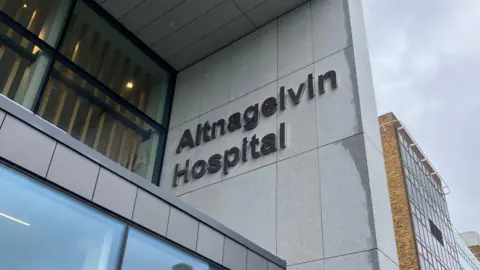
Inspectors said a concerted effort was required to repair relationships between South West Acute Hospital (SWAH) staff and the Northern Ireland Ambulance Service (NIAS).
The report also noted that no additional resources had been commissioned to deal with the increased ambulance transfers or to provide extra surgical bed capacity at Altnagelvin.
Some front-line staff reported feeling "constantly in conflict" with patients who were unhappy about long waits and being transferred miles from home for treatment.
Others said they were "frequently" subjected to verbal abuse from frustrated patients and relatives.
NIAS staff described a breakdown in communication with hospital staff and warned that emergency transfers were placing additional pressure on their already stretched resources and "leaving rural communities vulnerable".
Patient experiences were mixed. Some praised staff for their compassion and professionalism, but others described long waits, overcrowding, and care being delivered in corridors.
Some patients and relatives reported that they did not feel safe in Altnagelvin's emergency department.
The report highlighted four areas requiring improvement, including the application of the pathways, staff engagement and communication, patient outcome monitoring and risk management.
RQIA did acknowledge progress in areas such as direct admissions to surgical wards and the recruitment of surgical staff, but the body said further measures were needed to sustain improvement.
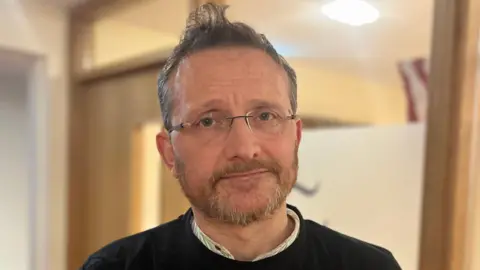
The campaign group Save Our Acute Services (SOAS) said the report exposed a growing gap between the experiences of front-line staff and the assurances provided by senior management.
SOAS spokesperson Donal O'Cofaigh said the report "reflected the continuing failure of the temporary pathways currently in place".
"They've told the regulator exactly where the risks lie. Yet 18 months after RQIA's own review the urgent recommendations are still not delivered.
"Our community is left with pathways that staff themselves say are not safe and not effective".
The group called on Health Minister Mike Nesbitt to "move beyond temporary sticking plaster fixes and to fund and commission a sustainable emergency surgical service for SWAH".
Karen Hargan, Chief Executive of the Western Trust, welcomed the report saying it recognised "the significant progress" being made.
"We remain committed to maintaining safe, effective and sustainable services for our population and welcome the recommendations identified by RQIA.
"We will continue to work closely with RQIA, our staff and partner organisations to implement these improvements and ensure the highest standards of care for patients across the Western Trust area."
Update 02 September 2026: This article was updated for clarity and accuracy.